
A Sufi is a human being but can there be a Sufi Djinn?

@Karlysymon @RedQueen @Orwells_mentor @Kimmers
-
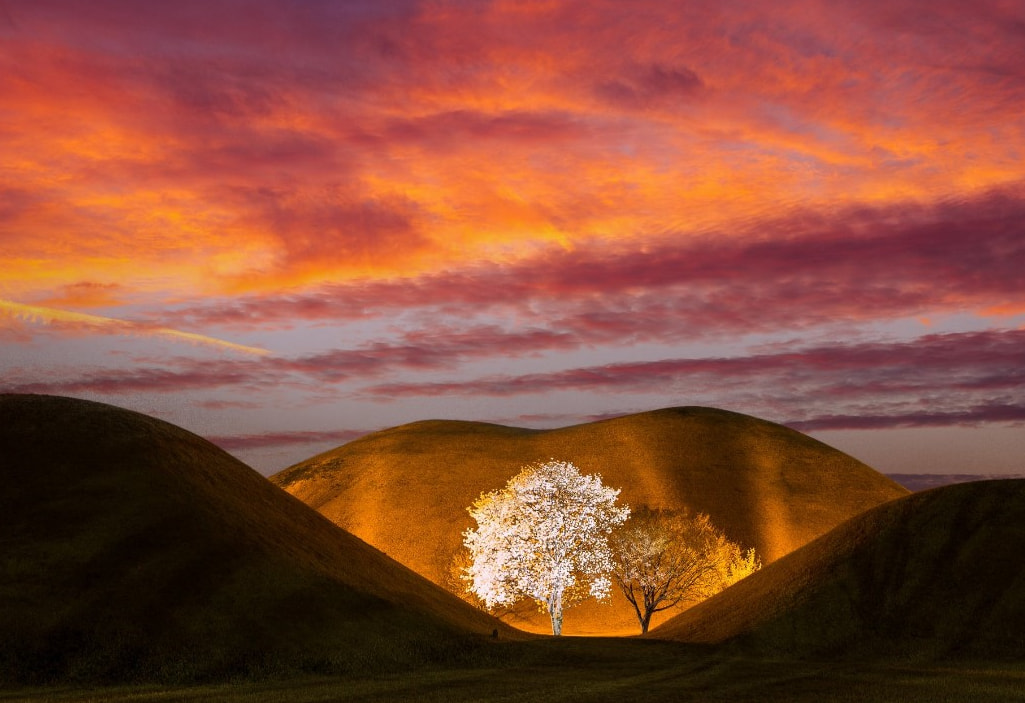
Brighter than the sun
-
Fairer than the moon
-
Your beauty is so dazzling
-
Bigger than the sea
-
Higher than the clouds
-
Your soul is so enlightening
-
What I’d give to see your face
-
Beaming with so much grace

1 Like
1 Like
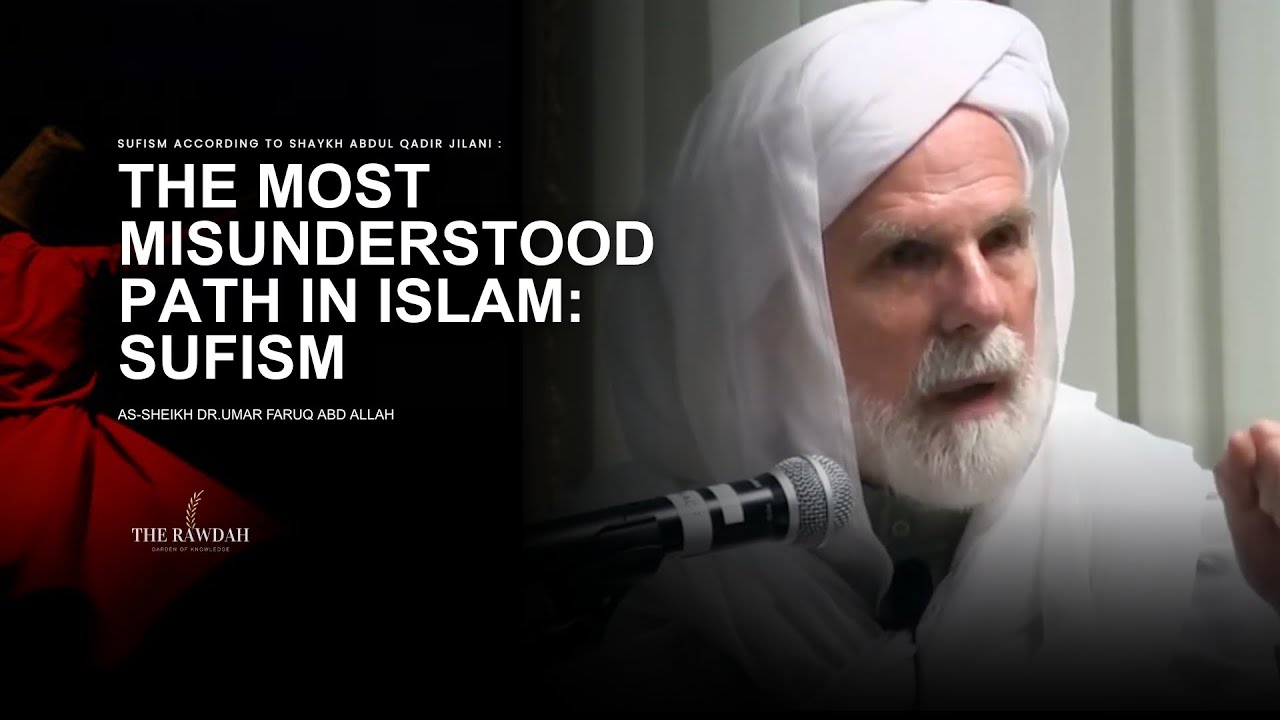
@Chaldean @ 3:55 minutes, mention is made of Isaac Newton below:

2 Likes
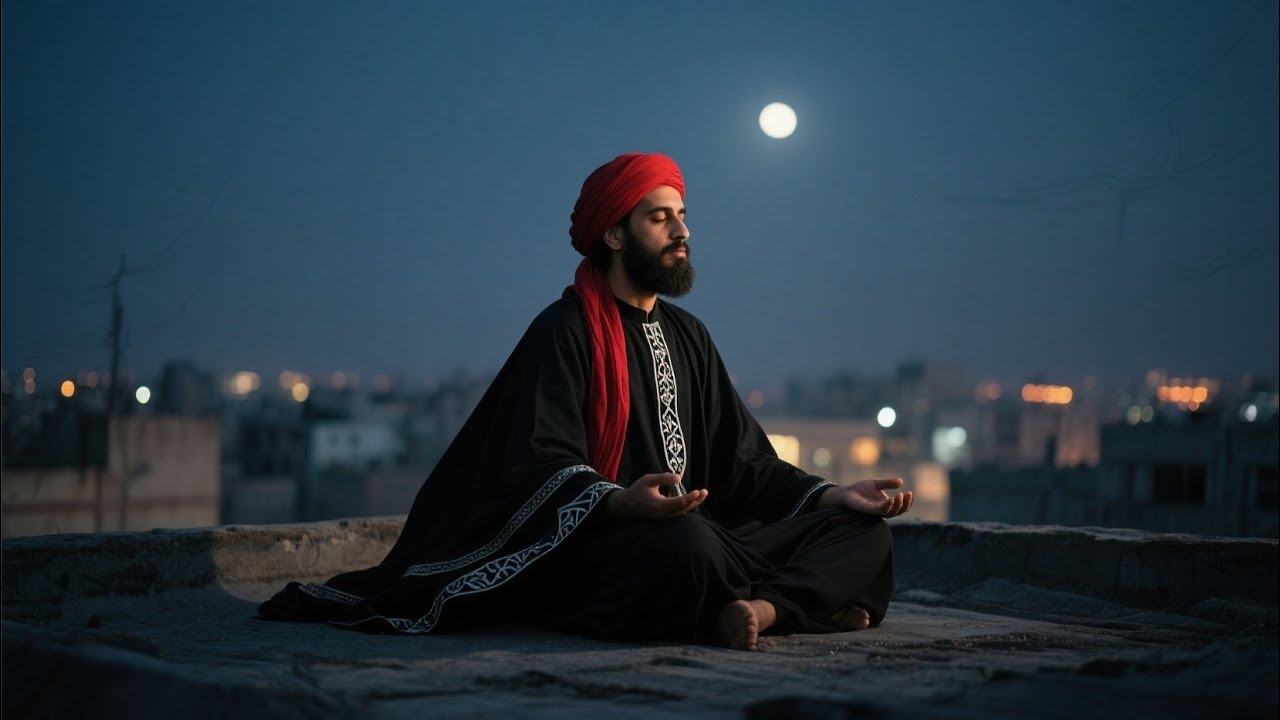
 Welcome to a profound spiritual journey.
This is a deep Sufi meditation built upon the sacred chant “La ilaha illa Allah” — a timeless remembrance that awakens the heart and brings peace to the soul.
For centuries, Sufi masters have used this dhikr to reach a state of inner calm and divine love.
In every breath, in every whisper, feel the energy of surrender and connection to the One.
 Allow this meditation to help you:
Release anxiety and overthinking
Heal emotional wounds
Awaken your spiritual awareness
Feel peace through divine remembrance
Use this dhikr for your daily meditation, before sleep, or during moments of reflection.
Let the sound guide your heart home — to peace, to light, to Allah. 
“La ilaha illa Allah” — There is no god but Allah.
Tags / SEO Optimization:
#LaIlahaillaAllah #SufiDhikr #IslamicMeditation #SufiHealing #SpiritualCalm #HeartAwakening #IslamicChant #DhikrMeditation #SufiVibes #PeacefulIslamicMusic #SufiSoul #HealingMeditation #SukoonVibes #SpiritualJourney #SoulHealing


A lover of The Almighty.


A Sufi knows that Only The Almighty Alone Can Truly Create any form of nature and artificiality, whatsoever it may be, without having to make use of any entity whosoever.
AI Overview
The idea of a single date fruit in Jannah (Paradise) being large enough for forty people to eat is a description found in some Islamic traditions, specifically related to the size and abundance of fruits in Paradise.
While the exact wording in your query isn’t a direct quote from universally accepted sound (Sahih) hadiths (reported saying of the Holy Prophet - Peace be upon him), similar descriptions exist in various narrations regarding the blessings of Jannah (Paradise):
-
Size of fruits: One narration describes the dates in Jannah as being the size of large water jugs or pitchers, whiter than milk, sweeter than honey, softer than butter, and free of pits.
-
Abundance and sufficiency: Other hadiths emphasize the abundance of food in Jannah, where a single pomegranate will be sufficient for a group of people, and they will even be able to seek shelter beneath its skin. Similarly, a single milch-camel, milch-cow, or milch-ewe will suffice a large number of people or an entire tribe.
The common theme in these descriptions is not a specific number of people (e.g., forty), but rather the extraordinary scale, quality, and limitless abundance of all provisions in Jannah, far beyond anything experienced in this world.
Dates themselves hold a special place in Islam, with the Prophet Muhammad (peace be upon him) having praised their benefits in numerous hadiths, including calling the 'Ajwa date one of the fruits of Paradise in a general sense, and recommending seven of them in the morning for protection against harm.
Ultimately, the exact details of Jannah’s rewards are part of the unseen, and such descriptions in hadith are often understood to illustrate the incomparable nature of Paradise’s blessings.
On the other hand, concerning the life of this world, did you know about the following, should He So Empower anybody to that effect?


Tajelli, an Arabic word. It means radiance, the kind that comes from something stepping out of concealment, an unveiling, a self-disclosure.
When the sun clears the horizon and the landscape suddenly exists in color, that is tajali.
When a face turns toward you and you see it fully for the first time, that is tajali.
The root is jim laam waw (three Arabic letters) to be clear, to be revealed, to shine forth.
Its opposite is istitar, concealment.
And the entire Sufi understanding of reality lives in the space between these two words.
What is hidden becomes manifest.
What is manifest was always hidden.
The movement between them is not a one-time event.
It is what is happening right now in every atom at every moment.
In the Sufi tradition, Tajali carries the weight of an entire metaphysics.
It is the term Arabi and the masters after him used to describe what reality actually is.
Not a collection of objects, not a stage on which events play out, but an act, a continuous sustained act of the real making itself visible.
Visible to what? To itself. This is the teaching.
The world, every surface, every sound, every face is the real disclosing itself to itself.
The light by which you see is its light.
The seeing is its seeing. And the thing seen is its face reflected in a mirror it made for that purpose.
That mirror is you. That mirror is everything.
What follows is the evidence for this claim drawn from the masters who articulated it across centuries in Arabic, Persian, Turkish, and Urdu, often independently, often without access to each other’s work.
They arrived at the same place.
Chapter 2: The Report
Before the theory, the experience.
Tajelli is not something the Sufis reasoned their way to it is something that happened to them.
The metaphysics came after an attempt to account for what they had seen.
Babak Kuhi of Shiraz
In the market, in the cloister, only God I saw.
In the valley and on the mountain, only God I saw.
Neither soul nor body, accident nor substance, qualities nor causes. Only God I saw.
Like a candle I was melting in his fire amidst the flames outflanking.
Only God I saw myself with my own eyes.
I saw most clearly. But when I looked with God’s eyes, only God I saw.
I passed away into nothingness. I vanished. And lo, I was the all living. Only God I saw.
Watch the movement. It starts in ordinary places, markets, cloisters, valleys, mountains, places you could walk through on any afternoon.
Then the philosophical categories begin to dissolve.
Soul, body, accident, substance, quality, cause, the entire apparatus we use to sort reality into parts gone.
Then the self that was doing the sorting gone. And what remains is not emptiness.
I was the all living.
What remains when everything falls away is not less than what was there. It is more.
This is tajali experienced from the inside.
The veils thin and then they are not there.
And what was behind them turns out to be what was in front of them all along.
The market does not disappear. It is still a market, but now it is a market and a theophany.
A place where the real is visibly, undeniably present.
The Sufi tradition has a technical term for this, Kashf (Unveiling).
But Kashf describes the experience from the human side.
The moment the mystic’s perception clears.
Tajali describes it from the side of the real. It is not that you have finally managed to see.
It is that the real has chosen to show itself.
The disclosure is active. It comes from the other direction.
Dhun Nuun al-Misri
I never listened to the voices of animals, the rustling of trees, the splashing of water, the song of birds, the whistling of wind, or the rumble of thunder, without sensing in them a testimony to the unity of the real, a proof of its incomparableness.
Every sound, every motion in the natural world, not symbols pointing elsewhere, not signs to be decoded, testimonies, direct evidence.
Tajali pouring through the sensory world without interruption.
Dhun Nuun does not say he believes this.
He says he senses it. The knowledge is perceptual, not theological.
Chapter 3: The Mirror
From the experience, the tradition moves to the question, what is actually happening?
If the real is disclosing itself in every atom, what is the mechanism?
What is the relationship between the one and the many?
The answer across centuries and languages is the mirror.
Iben al- Arabi
The real is the first, the last, the outer, the inner, the substance of what is manifested and the substance of what remains hidden at the time of manifestation.
None sees the real since it is manifested to itself and hidden from itself.
The substance is one although its modes are different.
And then the line that compresses the entire teaching.
The world of nature is many forms in one mirror. No, one form in diverse mirrors.
Many forms in one mirror. One form in many mirrors. Both true simultaneously.
This is not contradiction. This is the structure of Tajali.
The real is one. Its self-disclosures are infinite.
Each disclosure is complete. The whole of the real is present in every atom.
And yet each disclosure is also partial because no single mirror can show every angle of an infinite face.
In Arabic, the word for this multiplicity within unity is Kathra, manyness.
And the word for the unity that persists through all that manyness is Wakta.
Iben al-Arab’s central doctrine Wahdat al- Wujud the unity of being is the claim that Wakda and Kathra are not opposites.
They are two descriptions of the same tajali.
The one does not become many. The one appears as many. The many do not merge back into the one.
The many were never anything other than the one seen in mirrors.
Fakrain Iraqi
In order to display its perfection, love shows itself to itself in the mirror of lover and beloved and reveals its beauty to its own contemplation through the one who sees and the act of seeing.
Although only one thing is beheld by the eye of contemplation, when one face appears in two mirrors, in each mirror a different face appears.
The face is only one yet multiple when you see it in many mirrors.
Stand between two mirrors. Your face appears in both, but differently in each one.
The face has not multiplied. The mirrors have. And each mirror by its angle, its shape, its quality discloses a different aspect of the same face.
No single mirror captures the whole. Every mirror captures something real.
This is Tajali made spatial, made visible, made domestic.
Shabistari
Non-existence is the mirror of absolute being. In it, the light of the real is reflected.
Non-existence is the mirror.
The world is the reflection and the human being is the reflected eye of the unseen.
You are that reflected eye and the real is the light of the eye.
In Sufi metaphysics, the mirror is not made of glass. It is made of atom, non-existence.
The world exists as a reflection precisely because it has no being of its own.
Its emptiness is what allows it to receive the image.
A mirror that had its own face could not reflect another.
It is the nothingness of creation that makes it a perfect surface for Tajali.
And notice where Shabistari places the human being in this picture.
Not as the mirror, not as the reflection, but as the eye, the reflected eye of the unseen.
You are the point at which the real’s self-disclosure becomes self-perception.
The mirror can hold the image, but only the eye can see it.
When you look carefully into the root of this matter, the real is at once the one who sees, the eye that sees, and the thing seen, seer, seeing, and seen, all three at once.
This is Tajali taken to its logical conclusion.
If there is only one, then every element of the act of perception, subject, capacity and object must be that one appearing in different modes.
Chapter 4: Veil and Face
If everything is self-disclosure, why don’t we see it? The tradition takes this question seriously and its answer is the strangest part of the teaching.
The tajali itself is what hides the real.
Alhujiri
I have found this universe to be a dwelling place of divine mysteries deposited in created things, substances, accidents, elements, bodies, form, proportion.
All of these are veils over divine mysteries.
The intellect can hardly comprehend them and the spirit can only dimly perceive the marvels of nearness to the real.
But the human being in love with the surface of things remains sunk in ignorance making no attempt to lift the veil that has settled over everything.
The Sufi term for this is hijab veil and the teaching on hijab is that every Tajali simultaneously reveals and conceals.
Each self-disclosure shows one face of the real and by showing that face hides all the others.
The very act of becoming visible in a particular form is an act of becoming invisible as the formless totality.
This is why al- arabi says the real is manifested to itself and hidden from itself in the same breath.
The manifestation is the hiding Shaim.
The very self of the world is the veil of the world. No, the world itself is the veil of the world.
The world veils itself.
The thing you are looking at is simultaneously what hides the real and what is the real.
You do not lift the veil to find the real underneath the way you lift a curtain to find a window.
The curtain is the window. The tajali is the hijab.
This is what makes the Sufi understanding different from simple pantheism.
The idea that everything is God.
In pantheism, you look at the world and say that is the divine.
In Tajali, you look at the world and realize you cannot say anything so simple.
The world is a self-disclosure that conceals as it reveals.
To say that is God reduces the infinite to the form it is wearing at this moment.
To say that is not God denies the tajali altogether.
The truth is in the space between those two statements.
A space the rational mind cannot hold but the heart the Sufis insist can perceive directly.
Rumi the real maker is hidden in the workshop.
Enter the workshop and you will see the maker face to face.
But outside the workshop the work itself spreads a curtain.
You cannot find the maker outside the work.
You cannot find the real outside its own self-disclosure.
The Tajali is both what conceals and the only place the real can be found.
There is nowhere else to look. There is no backstage.
You are like the water and we are the millstone.
You are like the wind and we are the dust. The wind is unseen, but the dust is seen by all.
You are the spring, and we are the green garden. The spring is invisible, though its gifts are everywhere.
Ibn Ata Allah of Alexandria.
How can you be hidden when you are always manifest? How can you be absent when you are always present, always watching over us?
Hidden and manifest.
These are not opposites. They are the two faces of every tajali. Inseparable,
co-present, like the front and back of a single page.
Chapter 5: Every Atom
Tajali is not reserved for grand theophanies, burning bushes, heavenly ascensions, visions in the night.
The Sufis insist with a specificity that borders on stubbornness that it operates at every scale down to the smallest thing that exists.
Shabistari
In the wing of a gnat is the ocean of life. In the pupil of the eye, a heaven.
What though the grain of the heart be small, it is a station for the Lord of both worlds to dwell in.
Beneath the veil of each atom is hidden the heart, nourishing beauty of the beloved’s face.
The wing of a gnat.
Not the cosmos. Not the starry sky. Not the grand architecture of the heavens. a gnat’s wing.
This is where the teaching plants its flag. If Tajali is real, it is real here in the smallest particular in what you would step over without noticing.
Margari, when the sun of your face appeared, the atoms of both worlds became visible.
Every atom through the light of your countenance became radiant as the sun itself.
The atom owes its existence to the sun while the sun becomes visible through the atom.
A reciprocity the tradition takes seriously. The atom needs the sun to exist.
The sun needs the atom to become visible.
The absolute needs the particular in order to disclose itself.
And the particular needs the absolute in order to be. Each atom is a tajali.
A complete self-disclosure of the real at the smallest possible scale.
And the sum of all atoms is another tajali. The same self-disclosure at the largest possible scale.
Both are complete. Both are partial.
This is the nature of the mirror.
The ocean of being was tossed into waves. It hurled a wave toward the shore.
Every particle that exists is identical with the whole. The whole is altogether the parts.
Usuli
Each wave that rises on the sea of absolute existence declares the secret.
I am the real openly or in secret.
Although in truth this orchard has one water and one gardener, what countless trees grow here from the myriad forms of reality.
Look at the race of human beings. Some are poison, some are sugar.
How passing strange diverse fruits appearing on a single tree.
One water, one gardener, countless trees, and among the trees poison and sugar.
The tajali does not produce uniformity. It produces infinite variation.
This is the point the tradition makes again and again.
The multiplicity of the world, including its contradictions, its harshness, its bewildering diversity, is not a failure of unity.
It is what unity looks like when it discloses itself through an infinite number of mirrors.
Chapter 6: Beauty
If the world is Tajali, what is being disclosed?
The tradition is consistent on this point and what it says may be the most counterintuitive part of the whole teaching.
What the real discloses first and fundamentally is not power, not knowledge, not law, beauty.
Whenever you picture a beautiful thing in your mind unmixed with any ugliness or a perfect thing surrounded by no imperfection, there you will find the real.
For all beauties are in truth its beauty.
Now it is the loveliness of every lovely face. Now the generosity of every open hand.
This is a remarkable instruction.
It does not say think of God. It says think of anything beautiful with nothing ugly mixed in. That moment of pure aesthetic perception.
Before the mind categorizes, before desire enters, before you even name what you are looking at, that is where Tajali is most transparent.
Beauty uncontaminated is the clearest window.
The Arabic word for beauty jamal is one of the fundamental divine attributes and its counterpart is jalal, majesty or overwhelming power.
The Sufis understand every tajali as a disclosure of either Jamal or Jalal or both at once.
A sunset is Jamal. A thunderstorm is Jalal.
A birth is both.
The sweetness and the terror are both self-disclosures.
But beauty jamal is the one that draws the heart.
The one that creates the pull the Sufis call jab, Divine Attraction.
You see something beautiful and something in you moves toward it involuntarily before thought.
That movement is not yours. It is the real recognizing itself.
Jami every beauty and perfection manifested across the levels of existence is a ray of the real’s perfect beauty reflected there.
Whoever is wise derives wisdom from the divine wisdom.
Wherever intelligence is found, it is the fruit of the divine intelligence.
I am the tree. These flowers are my offshoots.
Let not these offshoots hide from you the tree.
What profit are rosy cheeks, graceful forms, and ringlets framing a lovely face?
When absolute beauty shines everywhere, why linger over finite beauties?
Ahad Alin of Kirman
And yet the artist loves its work. That much is clear. There is none but the real.
So take heart. The truth that once speaks and hears itself, shows its face and perceives it.
The real shows its own face. The real perceives its own face. We are the occasion for both.
The moment you perceive beauty in a face, in a landscape, in the curve of a sentence, you are participating in the real’s self-perception.
That moment of aesthetic arrest when beauty stops you in place is tajali reaching its destination, the hidden becoming known.
Hafi, without you, nothing in this world exists on its own. Search where we will, we find. All of it is you.
Chapter 7: The Hidden Treasure
There is a famous Hadith Qudsi, a sacred saying attributed to the divine that the tradition treats as the key to why any of this exists.
I was a hidden treasure and I loved to be known.
So I created the world that I might be known.
A hidden treasure. The Arabic is kaki. Something precious, buried, unseen.
The word loved, aptu, comes from the root ha ba ba, the root for love itself.
The real did not decide to create. It loved to be known.
The origin of the universe in this telling is not will. It is love.
And the entire created world, every galaxy, every grain, every gnat’s wing is the consequence of that love seeking an object which is itself.
Algazali
The Real created all things for the manifestation of its power and its will.
Not out of need, not out of want, but to manifestly declare its glory in creating and producing and commanding without obligation, without necessity.
No obligation, no necessity. This is the freedom of Tajali.
Creation is not a duty discharged. It is a gift given to itself by itself for the purpose of self-knowledge through self-disclosure.
Jami
From all eternity the beloved unveiled his beauty and the solitude of the unseen.
He held up the mirror to his own face. He displayed his loveliness to himself.
He was both the spectator and the spectacle. No eye but his had surveyed the universe.
All was one. There was no duality, no pretense of mine or thine.
Before creation, before time, the beloved beholding its own beauty alone, total unity, no separation, no other.
He desired that they should be displayed to him in another mirror and that each one of his eternal attributes should become manifest accordingly in a diverse form.
Therefore, he created the verdant fields of time and space and the life-giving garden of the world that every bow and leaf and fruit might show forth his various perfections.
This is why there is a world because the mirror wanted to see itself reflected back.
Because self-knowledge required another surface, not a real other since there is nothing outside the one, but the appearance of another.
A mirror that could show the face from an angle the face could not see alone.
That mirror is you. That mirror is the wall. That mirror is the gnat’s wing.
Everyone a tajali.
Everyone a self-disclosure of the hidden treasure.
Wherever beauty peeped out, love appeared beside it. Wherever beauty shone in a rosy cheek, love lit his torch from that flame.
Beauty and love are as body and soul.
Beauty is the mine and love the precious stone.
They have always been together from the very first.
Never have they traveled but in each other’s company.
Beauty and love inseparable, co-arising.
The tajali creates love as its own inevitable response.
The real sees its own beauty in the mirror of the world and love is what happens in that seeing.
This is why the Sufi path is a love story. Because reality itself is a love story.
The hidden treasure loving to be known, disclosing itself in a billion mirrors and falling in love with what it sees.
Chapter 8: The Shadow and the Hand
One more dimension.
If the world is a mirror, if every atom is tajali, then what is the status of the mirror itself?
What are we in this picture?
Akadin of Kirman
While the hand moves, the shadow moves too. What else can the shadow do? It is only the hand that makes the shadow fall. The shadow has no substance of its own. Absolute being is the only thing wise people call being.
Nothing save the real exists at all. The shadow, not an illusion. Shadows are real. They fall on real ground. They have real shapes. But they have no independent existence. They are entirely dependent on the hand. They are the hands tajali in two dimensions.
Take away the hand and the shadow does not persist.
It was never anything other than the hand showing itself in a flattened form.
This is the Sufi understanding of created existence.
Real, not illusory, meaningful, not arbitrary, but not self- sustaining.
The Arabic term is faker, ontological poverty.
Everything that exists is at its root a borrower. It borrows its existence from the real moment to moment.
Its being is on loan. And this poverty, this transparency, this emptiness is precisely what makes it a mirror.
A thing with its own light could not reflect anothers.
Shah Ni’matullah
The named is one and the names 100,000. being is one but its aspects 100,000.
Its form is the glass and its meaning the wine although both are one substance in our eyes.
Without the real’s being the whole world is non-existent of its being and bounty. The world is a sign. The world arises from the diffusion of its universal being.
Whatever you see is from its universal bounty.
Mribe
The one who was hidden from us came and became us. The one who was of us and of you became us and you.
The king of the highest throne of sovereignty came down and despite being the only king became a beggar. The one who is exempt from poverty and wealth came in the garb of poverty in order to show forth true riches.
The real does not observe the world from a distance. It enters it. It becomes the beggar, the dust, the gnat’s wing. The tajali is total.
There is no reserve held back, no part of reality that is merely secular, merely surface, merely material.
The whole of it is the hidden treasure stepping out of concealment.
The whole of it is the sun clearing the horizon.
Chapter 9: The Disclosure
Thou all creation art, all we behold.
But thou, the soul within the body lies concealed, and thou dost hide thyself within the soul.
Oh soul in soul, mystery in mystery hid before all worth thou and art more than all.
The jelly.
A sun clears the horizon. A face turns toward you. A landscape that was dark suddenly exists in color.
This is what is happening. According to these masters, this is what has always been happening and what will never stop happening.
The hidden treasure loving to be known, stepping endlessly out of concealment into the 10,000 forms of the visible world.
The disclosure is not over. It did not happen once in the past at the moment of creation. It is happening now in the wing of the gnat in the grain of the heart in whatever you are seeing at this very moment.
You are not the audience of this tajali.
You are the mirror in which right now the hidden treasure becomes known.

SUFI means four letters in one word.
Penned in sky blue ink by me, encased in yellow on the 15th of July 2026, is what follows:
Rapid Crystal Clear [Pen] 0.7 millimeters India
Did thou know that Japan too manufactures pens through Mitsubishi Co. Ltd?
Four letters in one word
Four lines per paragraph
Mauritian writing concerning
The Almighty Having Created
Just about practically anything
One can think of as paired
To each other
Whether in one
Way or another
So what’s the plan?
No plan really except
That I just love to
Write so that I correct
And repair my sins in two
I’m in a room, volume?
Nay, area rather:
Say sis times four, broom?
Yea, never that much a bother!
Don’t you just
Love colors?
Whether indoors or outdoors?
Otherwise, who do you trust?
Regardless, at the mall the other day
Or was it night instead I cannot say
I picked up a pen, bandaged for grip
Branded ‘‘deli 08 SemiGel 0.5’’ doesn’t rip!
My favourite must be the pencil though
Although the pentels have got more color
Black and white, write away, just do
Don’t forget The Almighty whatever comes true
For He Did Create every single thing
To be a mirror image for each other
Therefore everything’s in thrice too brother
Consider one point five and three’s a string
The wall and the paint for instance
Colors are
Full of paint
Wood’s ull
of trees, mate!
The wardrobe and its contents!
Even the cupboard!
How does one ever get bored?
The floor is
Hard but slippers are soft
The wind blows but
The fan’s still on
Electricity flows while wind blows
The sun shines and dews sublime
The birds sing along with crows
Who once in a while, throw in a rhyme
What else is there to write about
Questions left without answers?
Do not waste a dime
Otherwise you’re slime!
Food awaits the cat that sleeps and slumbers
Air is breathed in and out while nothing crumbles
Bookshelves await, books full of wonders
The bed’s vacant while I dream of scary thunders!
Be past, be the future,
Do not care to waste, be spaces!
Between our eyes and the world,
What can also be witnessed?
Worlds beyond and planets undiscovered?
May each and every imagination be forever Blessed!
Glory To The Creator of just about every mother
Even this land’s truly a wonder!
Please do keep praying so that everything blooms
Sweet is the beauty of nature
Unity is beauty too
Fragrance? Another wonder!
Around faith should everybody care to gather.
How Blessed are eyes that see!
How beautiful are sounds to our ears and tastes to our palates,
Let alone the sublimeness of the food in our plates!
